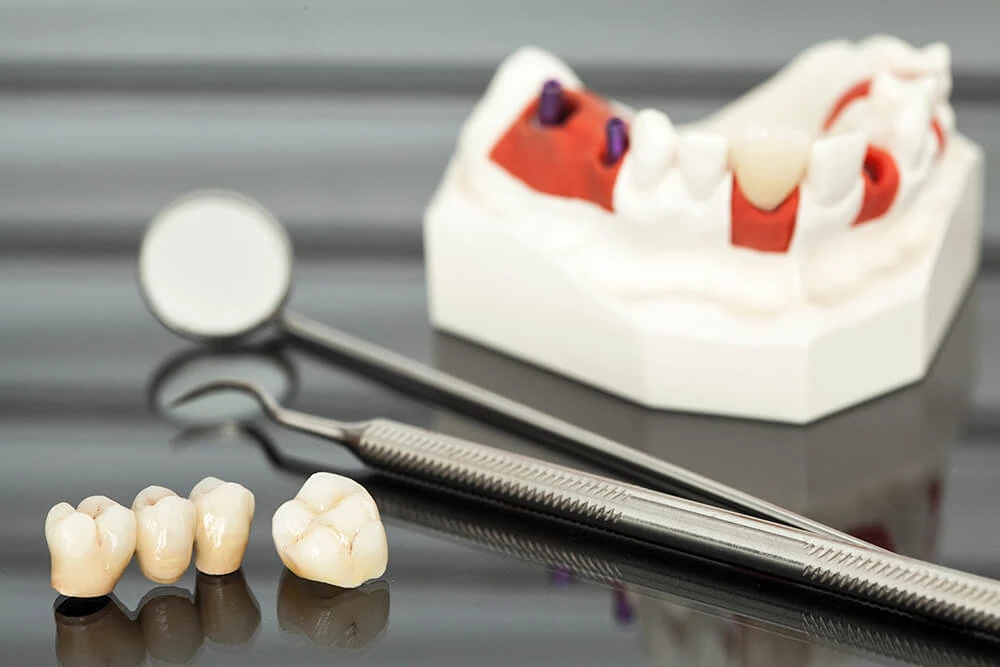
Have you ever wondered why dental crowns and veneers break? Did you blame your dentist or bad luck? Crown breaking is not normal and dentists are trained to do a good job customizing crowns for you. What’s the trick? In this article, Houston leading TMJ dentist Dr. Afsaneh Moradi reveals a secret to long-lasting crowns and veneers.
Dr. Moradi, why do crowns break?
Crowns can last as long as 15 years. When a crown breaks after 3 years or sooner it is a vivid sign that something is wrong. Crowns lasting between 5 to 10 years don’t usually signal a problem though there might be one.
There can be several different reasons why crowns break: from a bad choice of the material to poor fitting to teeth grinding. Your dentist shall take the impression for the crown and then make sure that the bite registration is correct. This will ensure that you feel comfortable with your new crown. However, this is not enough for it to last long. Some people unconsciously grind their teeth, and when this happens the upper and lower jaw generate a tremendous amount of biting force that leads to crown breaking. People may not even notice that they have bruxism. A dentist is able to tell that a person grinds the teeth by the following signs: bone loss in one or several areas, slightly or significantly grinded surface of one or several teeth and a history of frequent crown breaking. So even when a crown is manufactured to fit the mouth perfectly the forces created by teeth grinding would lead to crown breaking.
Is there a way to eliminate teeth grinding as a cause for crown breaking?
Yes, there is a way and TMJ dentists can help.
TMJ is a name for a jaw joint. A TMJ dentist is a dentist that has undergone additional training in aligning the jaw joints with non-surgical dental procedures. Correct positioning of the jaw joint is essential for healthy teeth. Some people become aware that they have a misalignment of the jaw joint only when they experience pain in the jaw or when their ENT doctor can’t determine causes for ear pain. Read more about other TMJ/TMD symptoms here.
So, the way to eliminate teeth grinding is to correct the jaw joint positioning. This will ensure that there is no excess force present when a person bites. No teeth grinding – no crown breaking.
What would you recommend for people with a history of frequent crown breaking?
I recommend being seen by a TMJ dentist that has gone full 5 years of additional training in Pankey Institute and has had successful experience treating patients with TMJ disorder.
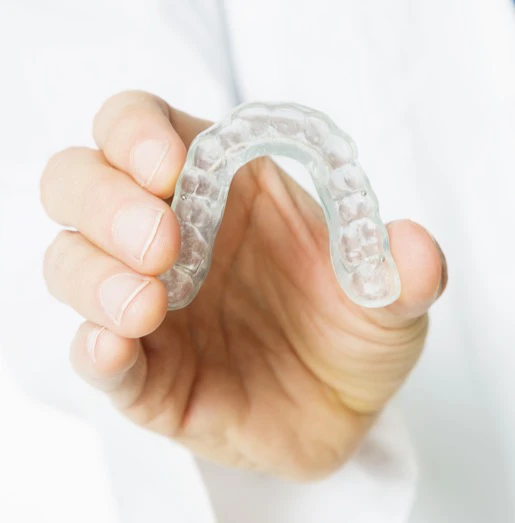
In our office, we offer a complimentary consultation to determine if TMD conditions are present and recommend a treatment plan depending on the case. Most often we start treatment with a TMJ guard that eliminates pain, teeth grinding and other symptoms very fast. It is important to understand that the TMJ guard and a regular night guard are not the same things. You can read about it here.
We welcome new patients into our office. Please call 713-590-9777