Causes of Lockjaw Explained
Lockjaw is a reduced range of motion of the jaw. It can be painful and interfere with the sufferer’s quality of life, from being unable to chew normally to having difficulties talking, breathing, and caring for their teeth (flossing and brushing them). Headaches and neck pain are other symptoms that can result from the limited motion.

Inflammation
While there are many reasons for a limited ability to open the mouth or jaw, the leading cause of lockjaw is inflammation of the mouth’s soft tissue. The inflamed tissue may be from excess chewing (over mastication), jaw dislocation, or temporomandibular joint disorder (TMD or TMJ). TMJ is an umbrella term for several conditions that disturb the joint located between the skull and the mandible.
Another source of this inflammation is a short-term bacterial infection that usually enters the body through cuts or puncture wounds, especially when the area is dirty. The bacteria can cause tetanus, a disease with many stages, with lockjaw being a later development. The inflammation can also result from osteomyelitis (infection of the jaw bone), pericoronitis (infection around a partially-erupted tooth), an abscess, or from acute tonsillitis.
Worn, Tired Jaw Muscles
Lockjaw can also progress from other oral diseases, as well as fevers and other disorders, including tetany (involuntary muscle spasms). A partial reason why is the jaw’s muscles wear out and tire from swollen tissue and weakness. When the muscles are in this condition, they can’t open as wide as normal.
Injuries and Bone Issues
Injuries and bone problems can result in limited mouth opening too. A jaw fracture, for example, can happen after a significant head trauma suffered in an event such as a car accident or fall. Major trauma or repeated injury can also lead to myositis (essentially, swelling or soreness), in this case of the chewing muscles, and result in a locked jaw. Osteonecrosis and osteoarthritis are two examples of bone diseases associated with lockjaw.
The first step to better health is to identify that it is indeed lockjaw. In cases of infection, seek medical care right away. If it is instead a minor case, gently place a warm heat pad on the skin over the sore area to help soothe the strained muscles so they can then open wider. If you have lockjaw, it is also advisable to book an appointment with a TMJ dentist.
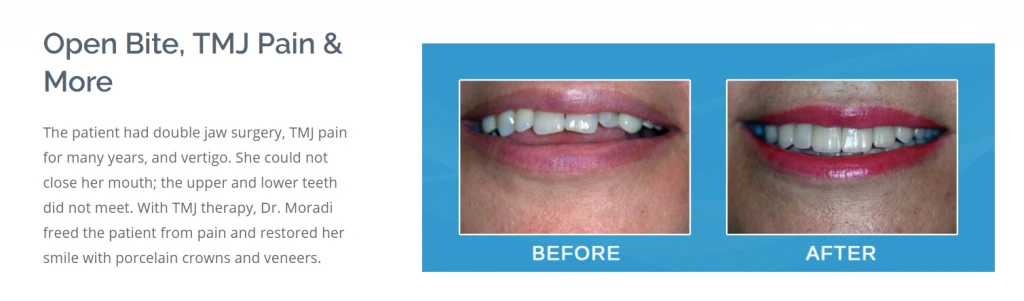
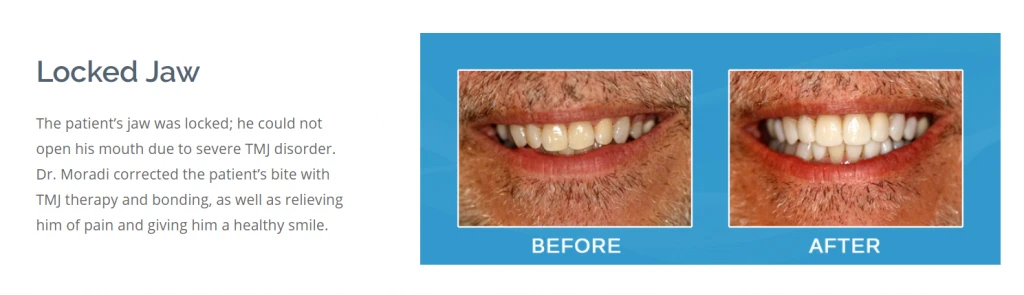
Dr. Moradi with Dental Wellness Group specializes in TMJ disorder treatment and has over 20 years of experience. You can also read more on non-surgical treatment options for locked jaw.
Schedule a complimentary consultation if you suffer from locked jaw, clicking jaw or any discomfort in the jaw area to learn about the options for relief and better oral health.