You might have a regular dental night guard that was custom-made for you by your dentist, but you still suffer from jaw pain or headaches, and you wonder why it is not helping…? You might even experience a lot of discomfort wearing it. In this article we would like to clear the sky around tmj night guard and answer these questions.
The clear plastic appliance effectively protects the teeth of a person from grinding during the night. Your dentist might prescribed it to you because you have grinded teeth and cracked crowns. In order to protect your crowns from future breaking and teeth from wearing out when you unconsciously grind at night – you’ve got your dental night guard. It is a great appliance and it does do its job to protect enamel, crowns and the teeth.
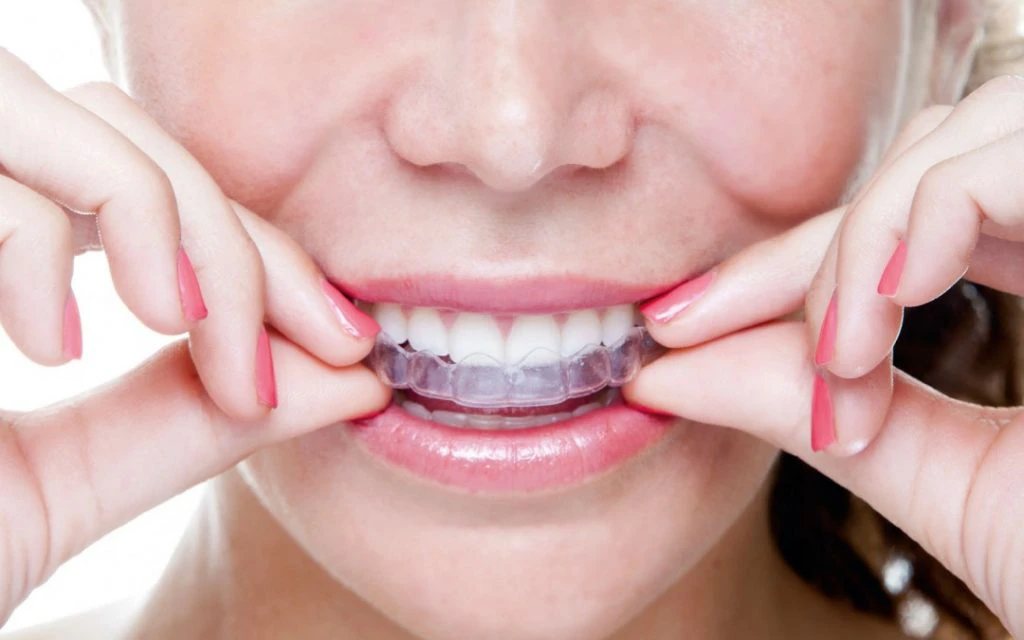
But if your lower jaw is not aligned properly the regular dental night guard won’t help. Why? Because your lower jaw will still want to get aligned which regular night guard won’t be able to fix. You still will experience discomfort in the jaw, head and will be grinding the teeth against the plastic appliance. What is the solution? The solution is TMJ night guard.
TMJ night guard is a plastic appliance that not only protects your teeth from grinding but also aligns your jaw and consequently relax your facial muscles, releases pain, headaches, opens airways.
To prepare the custom TMJ Night Guard, Dr. Moradi takes measurements and works with each patient until the appliance is done right to align the lower jaw. It is a thorough and detailed work that only specially trained dentists can and willing to perform.
A night guard is not a permanent fixture in the mouth. Instead, the appliance helps the jaw joint come into the proper position when you wear it, which is often at nighttime.
When you remove the appliance, the TM joint returns to its former dysfunctional positioning. While you may not feel immediate pain because the muscles have had hours to relax at night, by the end of the day, the muscles are tense again. For this reason, you need to wear the TMJ night guard whenever you go to sleep.
While a night guard is one way to mitigate TMJ pain and reduce muscle tension, there are longer-lasting alternatives. Dr. Moradi is the leading TMJ specialist in Houston and can develop a treatment plan to stabilize your jaw, removing the need for a night guard in the long run.