You may assume that you should brush your teeth right after having a meal. Recent studies, however, have shown that brushing your teeth after eating may damage them. Professionals have different views on when to brush your teeth. Many dentists agree that you should wait at least a few minutes.
The food that you consume contains sugar. Even if you do not eat sweets, you still eat carbohydrates and fruits. They contain sugars. Plaque is building up on your tooth enamel, it metabolizes the sugar in your food, producing acid. In an acidic environment, the enamel becomes weaker, more vulnerable. Perhaps you think you have to brush your teeth right away to maintain your oral health. However, when you brush your teeth after having a meal, you may damage the weakened surface of the teeth.
Study shows, that after eating, it takes about 30 minutes until the pH level of your mouth returns to normal.
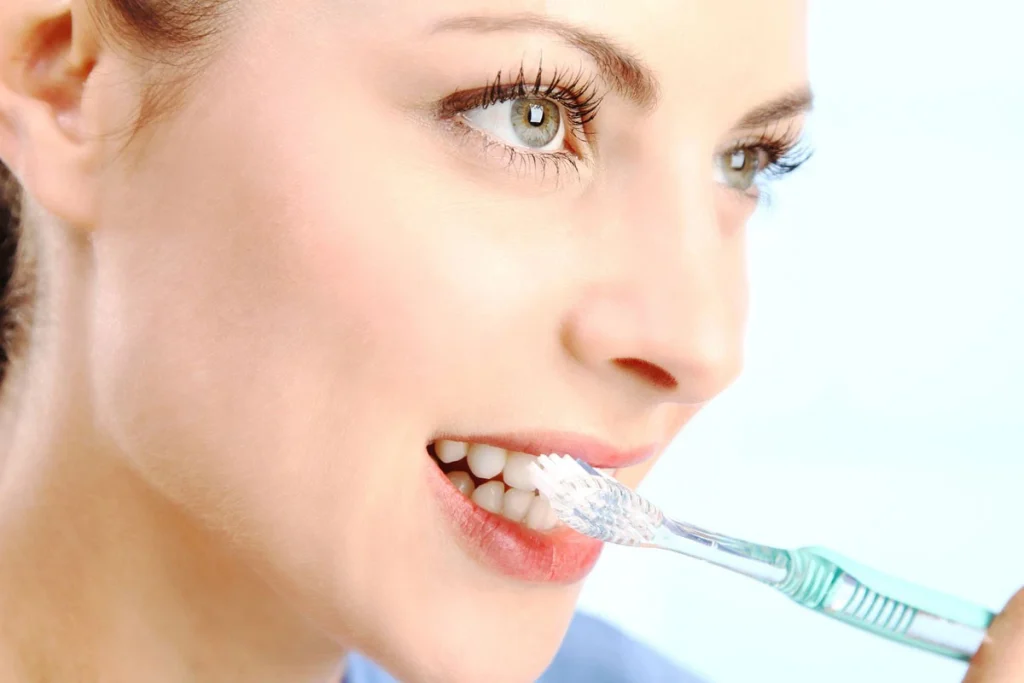
Do not brush your teeth for about 30 minutes. Within 30 minutes, your saliva will neutralize the acids and the pH level of your mouth returns to normal.
While waiting, you should do the following:
- Rinse your mouth with water. It will make the process faster.
- You may rinse your mouth with some antibacterial mouthwash. Select a mouthwash that does not contain any alcohol. It will balance the pH level of your mouth and prevent plaque from building up.
- Chew sugar-free bubble gum (it contains xylitol), since chewing helps saliva production. More saliva can neutralize acids faster.
- Eat some cheese. It can lower the pH level of bacterial plaque and help the teeth to rebuild the minerals within the enamel.